Ab workout at home
Eight no-equipment core exercises with clear cues and options for every level, plus a 10-minute ab routine you can do on your living-room floor.
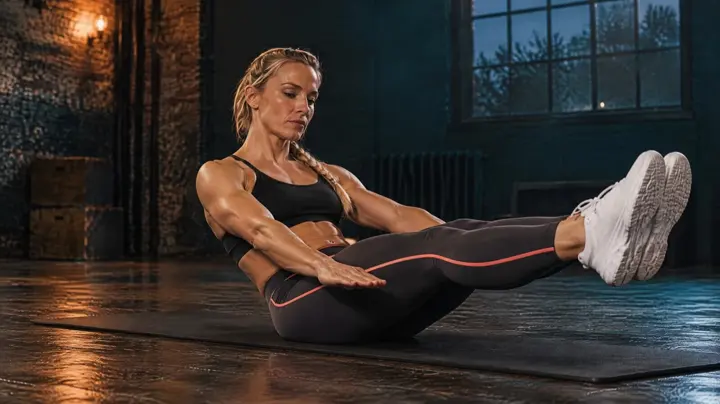
Why it works
Your core is more than your six-pack. It includes the deep muscles around your spine and pelvis that keep you stable when you move, lift and twist. A strong core supports good posture and helps protect your back.
The best ab workouts mix exercises that flex your spine, resist movement (like planks) and rotate.
Safety first
- Keep your lower back in contact with the floor in lying moves. If it arches, make the move easier.
- Do not pull on your neck in crunches. Keep your hands lightly by your ears.
- Breathe out on the effort.
- If you are pregnant, have recently given birth or have abdominal separation, check with a professional first.
The 8 exercises
- 1
Crunch
Upper abs- Lie on your back, knees bent, hands lightly by your ears.
- Breathe out and curl your head and shoulders off the floor.
- Lower slowly.
- How much
- 2 sets of 12–15
- Easier
- Reach your hands towards your knees.
- Harder
- Pause at the top for 2 seconds.
- 2
Reverse crunch
Lower abs- Lie on your back, knees bent, feet lifted.
- Curl your hips off the floor, bringing your knees towards your chest.
- Lower slowly.
- How much
- 2 sets of 10–12
- Easier
- Make the movement smaller.
- Harder
- Straighten your legs more.
- 3
Dead bug
Deep core- Lie on your back, arms up, knees bent at 90 degrees.
- Lower the opposite arm and leg towards the floor, back flat.
- Return and switch sides.
- How much
- 2 sets of 8 each side
- Easier
- Move only your legs.
- Harder
- Straighten your leg fully.
- 4
Forearm plank
Whole core- Rest on your forearms, elbows under your shoulders.
- Step back into a straight line from head to heels.
- Hold while breathing steadily.
- How much
- 3 holds of 20–45 seconds
- Easier
- Drop to your knees.
- Harder
- Lift alternate feet.
- 5
Side plank
Obliques- Lie on your side, elbow under your shoulder.
- Lift your hips into a straight line.
- Hold, then switch sides.
- How much
- 2 holds of 15–30 seconds each side
- Easier
- Keep your bottom knee down.
- Harder
- Lift your top leg.
- 6
Bicycle crunch
Obliques- Lie on your back, hands by your ears, legs lifted.
- Bring one elbow towards the opposite knee as the other leg straightens.
- Alternate sides slowly.
- How much
- 2 sets of 10 each side
- Easier
- Keep your feet on the floor and twist only.
- Harder
- Slow down to 3 seconds per side.
- 7
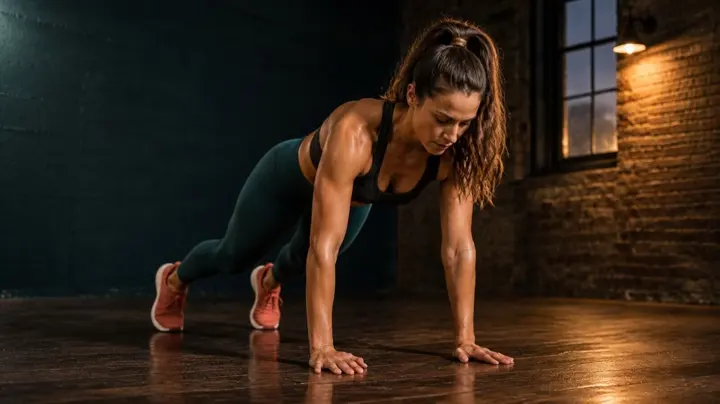
Mountain climber
Core & cardio- Start in a high plank.
- Drive one knee towards your chest, then switch.
- Keep your hips level.
- How much
- 3 sets of 20–30 seconds
- Easier
- Step the feet in slowly.
- Harder
- Speed up.
- 8
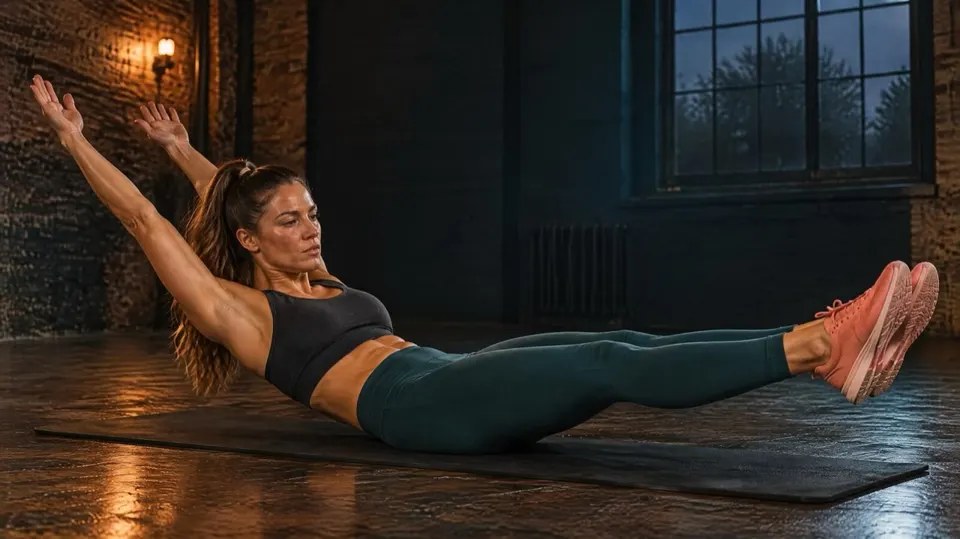
Hollow hold
Deep core- Lie on your back and press your lower back down.
- Lift your shoulders and legs a little off the floor.
- Hold.
- How much
- 3 holds of 10–30 seconds
- Easier
- Bend your knees.
- Harder
- Reach your arms overhead.
The routine
Work for 40 seconds and rest for 20 seconds. Go through the list once for 10 minutes, or twice for 20.
| Part | Exercises | Time |
|---|---|---|
| Round | Crunch, reverse crunch, dead bug, forearm plank | 4 min |
| Round | Side plank (each side), bicycle crunch, mountain climber, hollow hold | 5 min |
| Cool-down | Gentle back stretch, deep breaths | 1 min |
How often
Two to four short core sessions a week is plenty. Your core also works in squats, push-ups and carries.
Visible abs depend on overall body fat as well as strong muscles, so pair core work with full-body exercise and good eating.
Want a plan that does this for you?
Train at Home has 13 abs and core workouts, including 7-Min Abs, 13-Min Six-Pack Abs, 15-Min Ultimate Abs, Lower Abs, Standing Abs and a Plank Challenge.
Coming soon to theApp StoreFrequently asked questions
Can I get abs by working out at home?
Yes, you can build strong abs at home. Seeing them also depends on your overall body fat, which comes down to total activity and diet.
How often should I do an ab workout?
Two to four times a week is enough for most people.
Are crunches bad for your back?
For most people, crunches done with control are fine. If they hurt your back or neck, use dead bugs and planks instead.
Sources
This guide is general information, not medical advice. Talk to your doctor or a physiotherapist before starting a new exercise programme, especially if you have a health condition.